
20 years ago this day, May 11, 1998, India conducted its second nuclear test at Pokharan in Rajasthan. In a fascinating interview on Rediff.com, K Subrahmanyam revealed how Indian PMs reacted to nuclear ambitions.

'Putin dreams about his legacy. He wants to forcibly restore the Russian empire.' 'Unfortunately, after three years of large-scale war with massive human losses, Putin will not budge from his goal because human life is the cheapest resource in the Russian State.'

Defence Minister Rajnath Singh on Sunday claimed that Prime Minister Narendra Modi has been receiving invitations for functions scheduled much after the Lok Sabha polls, which showed the 'entire world believes his return to power is inevitable'.
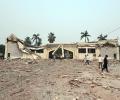
'Every decision India makes along the LoC, it must also consider implications along the LAC.'
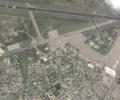
'We do not want to fall into a trap of uncontrolled escalation or all out conflict.' 'When the need arises we will do that.'

India has received the first consignment of uranium fuel from Russia for unit-1 of 1000 MegaWatt Kudankulam Nuclear power project in tamil Nadu.

In an interview with France24, Wickremesinghe said, "We are a neutral country, but we also emphasise the fact that we cannot allow Sri Lanka to be used as a base for any threats against India."

India had enough weapons-grade plutonium by 2014 to possess an estimated arsenal of 75 to 125 nuclear weapons, according to a prominent US-based think-tank.
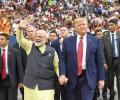
No single individual, institution, or action is to blame for this. The BJP is responding in kind -- definitely not without checking with its government. And they wait for Mr Trump, notes Shekhar Gupta.
GE India managed revenues of $2.6 billion (about Rs 130 billion) in 2007 and is hopeful of meeting its target of $8 billion (about Rs 400 billion) by 2010. Key projects in the transportation and nuclear power sector are expected to help it reach that target, says Vice-Chairman John G Rice.

Jaishankar said he was confident that Prime Minister Modi and President Putin will meet for an annual summit next year.

KAPP-3, the country's 23rd nuclear power reactor, is a 700 MW Pressurised Heavy Water Reactor (PHWR) designed indigenously, the NPCIL said in a release. The components and equipment for the reactor have been manufactured by Indian industries, and its construction was undertaken by various Indian contractors, it said.

'There has definitely been a breakthrough in the nuclear logjam. It is good to see nuclear energy back on the rails,' says Dr Anil Kakodkar, former chairman, Atomic Energy Commission.
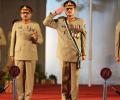
The launch of the first-ever direct train service from Delhi to Kashmir would be a big turning point in the Valley's mood and its integration with India. He had to thwart it at any cost, asserts Shekhar Gupta.

The senators also said that Pakistan should end support to terrorism and refrain from taking any steps that could destabilise Kashmir.

With the launch of the first indigenous aircraft today, India will join a club of nations like the United States, Russia, China, the United Kingdom and France that possess nuclear-powered submarines

'It was India's good fortune to have a Vajpayee lead the government at this crucial moment in history.' 'By taking the N-decision he saved future generations of Indians from being 'Kosovoed' or 'Iraqed',' says Colonel Anil A Athale (retd).
In spite of increasing opposition from the Left Front to the India-United States nuclear agreement, Prime Minister Manmohan Singh on Monday said that his government is committed to developing nuclear energy as a clean source of electricity."Our government is committed to developing nuclear energy as a clean source of electricity," Singh said after laying the foundation stone of the 1500 MW Pragati Phase three-gas power project at Bawana.
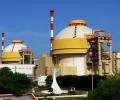
The attack also refreshed the memories of a virus attack on an Iranian nuclear facility.
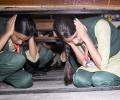
India conducted nationwide civil defence mock drills simulating multiple hostile scenarios like air raids, fire emergencies, and rescue operations across several states and union territories. The drills, dubbed 'Operation Abhyaas,' aimed to enhance emergency preparedness in light of recent terror attacks. The exercises involved coordinated efforts by various agencies, including civil defence personnel, police, fire and emergency services, and the military. Mock drills were conducted at various locations, including railway stations, malls, and high-rise buildings, showcasing the response capabilities of authorities in different emergency scenarios. The drills highlighted the importance of public awareness and cooperation in dealing with real-time emergencies.
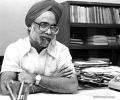
What stood out in his 15-year journey as a member of the political executive at the Centre was his glowing record as India's most successful and effective finance minister. Both as prime minister and finance minister, he understood the importance of gradualism, except when the economy or the polity was in a crisis.

With the spectre of nuclear terrorism growing, the international community is concerned about the security of India's nuclear facilities. The worry has grown since 2010, when radioactive Cobalt-60 surfaced in a New Delhi scrapyard, killing one person and hospitalising eight others.

The synergised demonstration of indigenous defence capabilities during 'Bharat Shakti' is a "testimony to its commitment towards modernisation through indigenisation," the sources said.

Once completed, the 10 reactors of 700 MW each will give much needed fillip to the domestic nuclear industry.
The government on Tuesday said it has received Rs 4,353 crore as dividend tranches from seven public sector enterprises, including Coal India and PFC. Government has respectively received about Rs 575 crore and Rs 2038 crore from Nuclear Power Corporation of India Ltd and Coal India Ltd as dividend tranches," Department of Investment and Public Asset Management (DIPAM) secretary Tuhin Kanta Pandey tweeted. Besides, about Rs 887 crore and Rs 653 crore have been received from Power Finance Corporation (PFC) and Hindustan Aeronautics Ltd as dividend tranches.
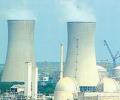
NPCIL executive director (corporate planning) S Thakur said fuel supply to its plants is now much better compared to the situation 2-3 years ago.
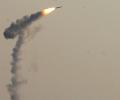
Pakistan has alleged that India was pursuing conventional, nuclear and missile development programmes which can lead to nuclearisation of the Indian Ocean and can disturb the "balance of power" in the region.

"AUKUS? What would it become? JAUKUS? JAIAUKUS?" Psaki said in lighter moments before giving answer to the question.
India should shift to a 'flexible response' from the current no first use and minimum deterrence posture. Against China it would be a strategy of dissuasion based on survivable second strike force that could threaten Chinese high value targets. In case of Pakistan, the flexible response strategy would be based on ambiguous no first or second use and a 1,000 point targeting with the aim of annihilation of that entity.

India's tactical and operational response demonstrated its ability to prosecute tri-service operations, even without a formal tri-service doctrine or the higher command structure needed to coordinate it, points out Ajai Shukla.
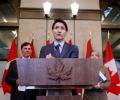
Calling Canada's behaviour 'the pits', India's recalled high commissioner Sanjay Verma says India was backstabbed and treated in a most unprofessional manner by a country that is supposed to be a friendly democracy.

Prime Minister Narendra Modi urged CEOs of US majors to take advantage of India's growth story as the country is making all efforts to become the third largest economy of the world in his third term. India is currently the fifth largest economy of the world after the US, China, Germany and Japan with a GDP of around $3.9 trillion. India has been the fastest growing large economies of the world with GDP growth rate of over 7 per cent for the last three consecutive years.

After the 1962 War with China, there was a demand to forge greater defence cooperation between India and the West. One such voice was that of Sudhir Ghosh, a distinguished MP, to tie up strategic cooperation with the USA immediately after the Chinese attack on India, recalls Rup Narayan Das.
India on Monday signed a civil nuclear cooperation deal with South Korea, allowing a framework for Korean companies to participate in atomic power plant projects in the country.
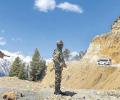
One hopes the new Lok Sabha will mark a break from a dismal tradition -- lack of interest in defence and security policies, argues Colonel Anil A Athale.

There is nothing to be worried about as bilateral ties are robust with solid foundations. Both are on the same page on the economic and defence/security ties bilaterally and globally and that shall continue irrespective of change in political dispensation in either country, points out Dr Rajaram Panda.

Larsen & Toubro (L&T) will aim to invest $3-4 billion in green hydrogen projects, along with its joint venture (JV) partners, said a senior executive from the company. These investments are planned over three to five years, depending on cost economics. The engineering conglomerate is also in talks to acquire the Nuclear Power Corporation of India's (NPCIL's) share in one of its forging JV companies for a consideration of Rs. 100-150 crore. "We are considering investments worth $3-$4 billion in the green hydrogen space, in collaboration with partners," said S N Subrahmanyan, chief executive officer and managing director of the company.
'We have launched a massive outreach programme, not only at Koodankulam but at all operating projects and those proposed. You will see the change, though this needs time and some healing,' says Kailash Chandra Purohit, the new chairman and managing director of Nuclear Power Corporation
India has offered to place 14 of the 22 thermal power reactors under IAEA safeguards in a phased manner between 2006-14, Dr Kakodkar told a media conference, adding the agreement would not affect the country's strategic programme in any respect.
Three important developments in the nuclear sector have put the department of atomic energy and the Nuclear Power Corporation of India on the back foot, says Praful Bidwai
